

Most websites are not stolen, they are absorbed. Nobody locks you out; the domain just quietly sits in someone else’s account, the hosting is “included”, and three years on, leaving means asking permission. Sometimes that arrangement is fair: the platform genuinely runs the site and prices the work honestly. Sometimes it is a hostage situation with an invoice attached. The difference is easy to name and easier to test, and this piece gives you the test.
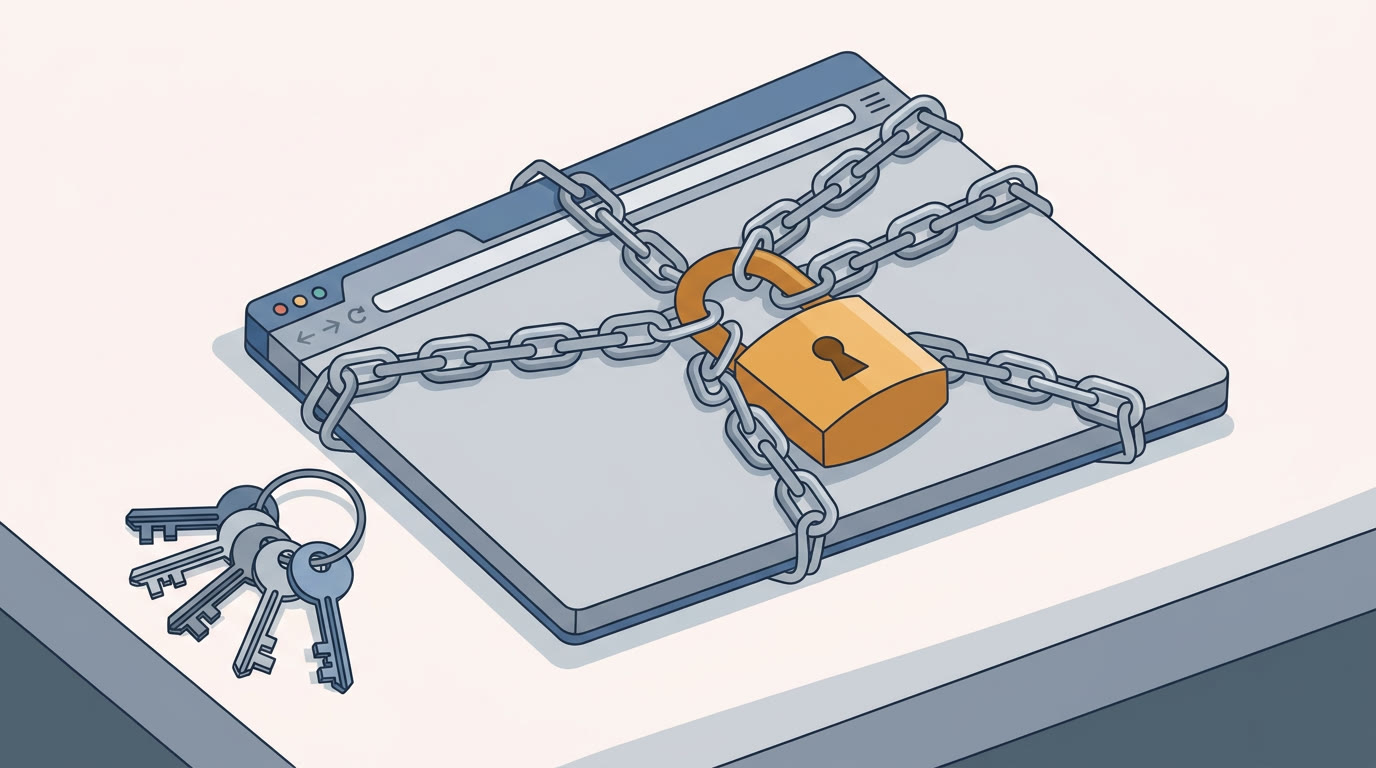
Lock-in versus platform: the actual difference
A platform arrangement is legitimate when the price is honest and the exit is stated. Plenty of businesses happily pay a monthly fee for a site that is hosted, updated, backed up and supported by the company that built it; that is a service, not a hostage, as long as two facts are true: you know what you are paying for, and you know what happens when you stop.
Lock-in is the same shape with the facts hidden. The tell is not the monthly fee, it is the answers to the questions nobody asks until they want to leave: where is the domain registered, who holds the hosting login, and what do I walk away with. A platform answers all three in a sentence. A hostage arrangement answers none of them, or answers with feelings: “you would not want to move it, it is all interconnected”.
| Question | Platform answer | Lock-in answer |
|---|---|---|
| Where is the domain registered? | “In your name, here is the registrar login” | “With us, we handle renewals” |
| Who holds hosting access? | You, or a stated admin account | Nobody outside the firm |
| What do I own if we part? | Files, content, domain, listed in the contract | “The site stays with us” |
| Can another developer work on it? | Yes, here is the access | “Only our team knows the system” |
One honest structure to recognise: some agencies build on their own in-house system, and genuinely cannot hand it to another developer, and they say so plainly on day one with the price in the open. That is a rental with honest signage, and some businesses are right to take it. The hostage version is the same arrangement discovered in year three from an invoice.
The five-question email
Send this to whoever runs your site today, and read the answers carefully:
- Which registrar is the domain with, and whose account is it in?
- Who holds the hosting control panel login, and can I have it?
- What exactly do I own: files, content, database, designs?
- If we stopped working together tomorrow, what is the handover process and what does it cost?
- Can another developer of my choosing get access if needed?
A healthy arrangement answers every one inside a day, with specifics, and usually with a note asking why you are asking. The defensive answers are as useful as the good ones: “why do you need that?” as the entire reply to question two tells you what the relationship is built on.
Score the replies before you need them, not during a crisis.
The exits, by situation
If the answers were healthy, nothing to do except keep the logins somewhere you control and revisit the questions annually.
If the domain is theirs and the relationship is good: request the transfer now. Domain transfers between registrars are routine, and the request is a test as much as an errand; a cooperative transfer takes days, and its smoothness tells you what a departure would look like.
If the site is on their in-house platform and you want out: export everything you can, the copy, the images, the customer enquiries, and get a quote for a rebuild on open ground. For most small sites the rebuild is cheaper than a year of unease, and you start owning the result.
If they stop cooperating: the domain has a dispute process at every registrar, needing evidence that the business is yours, invoices, emails, the trading history. It works, slowly. Hosting and files without cooperation are usually gone, which is the price of the lesson, and the reason the five questions come before the trouble.
You own your website when you can leave it. Not when a contract says so, when the domain is in your account, the logins are in your password manager and a stranger could rebuild the site from what you hold. Everything else is tenancy with extra steps.
Prevention for the next build
The asks that keep you out of the story next time, all at quote stage: register the domain in your own account from day one (it costs the same); hosting in your name with the developer as a collaborator, not the reverse; the ownership line written into the contract, files and content transferable on request; and a handover paragraph that names the process and its cost.
None of these are hostile asks, and a good builder welcomes all four, because firms confident in their service do not need walls. The reactions to the asks are, once again, the most informative part: welcome and you have found a keeper; hedge and you have learned the same lesson early, at quote prices instead of crisis prices.
Send the five questions this week, whatever the state of the relationship. The answers cost one email, and they set the price of every future decision about the site.