
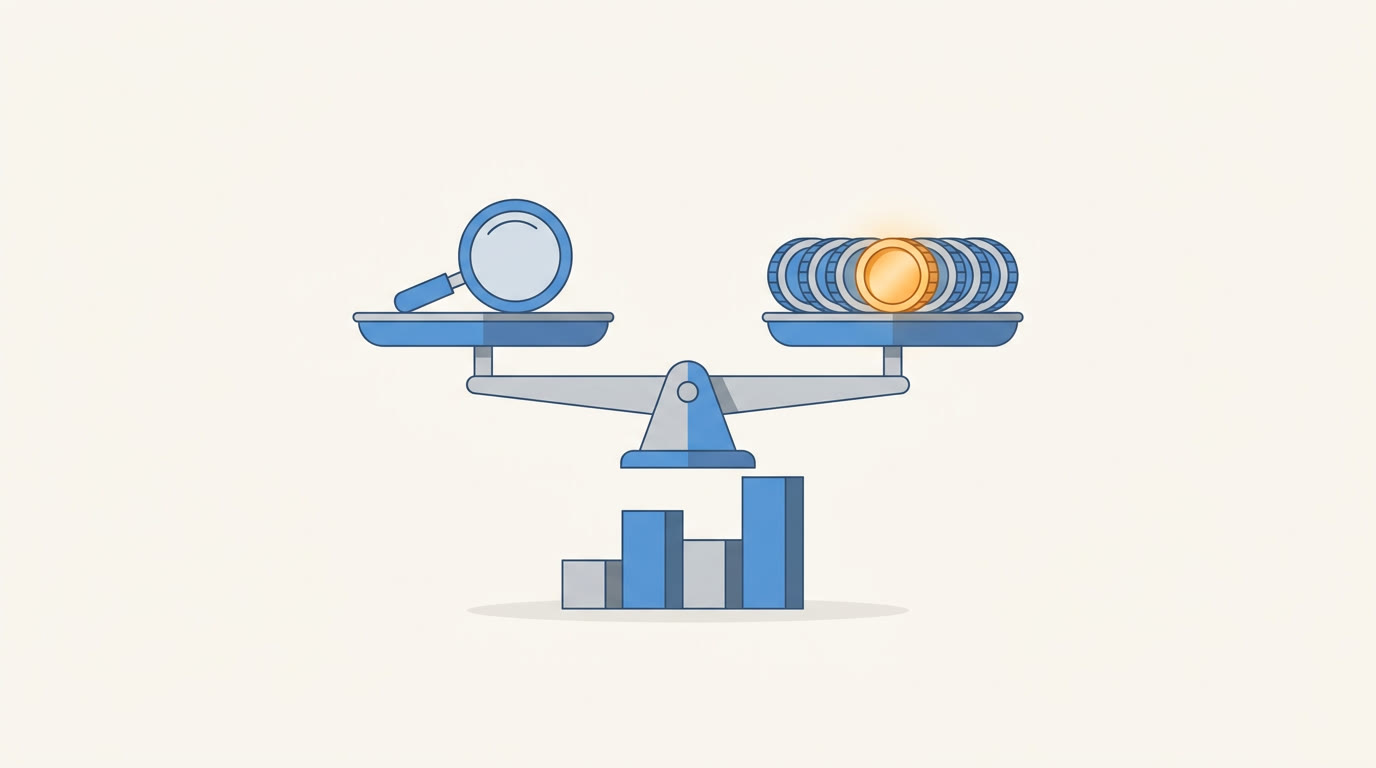
Google Ads is the fastest way to put your business in front of people searching for what you do, and the fastest way to spend a month’s marketing budget with nothing to show for it. Both things are true at once, which is why the honest answer to “should I run ads” is not a price or a promise, it is a set of conditions. Meet them and ads work; miss them and the same budget spent anywhere else does more. Here is the checklist, and a way to test with less than a tank of fuel.
What an ad click actually is
Strip the machinery down: every search triggers an auction among advertisers bidding on what was typed. You pay per click, the price moves with competition, and the click only earns its cost if it turns into an enquiry. That last step is where local businesses win or lose, and it has nothing to do with the ad platform. A click landing on a slow page, or a page without a phone number above the fold, is the same money as a click landing on a good page. The difference is what happens after.
This is why the first rule of ads is unglamorous: fix the landing page first. Ads in front of a poor page do not fail quietly, they fail expensively.
When ads genuinely make sense
Some situations are built for paid search, and it is worth naming them:
- The job is urgent and searched hot: emergency callouts, same-day repairs, last-minute childcare. The searcher wants a phone number in the next five minutes, and ads sit exactly there.
- You are new and Google has not learned to rank you yet. Organic visibility takes months; ads buy you a seat at the table while it develops.
- You have capacity to take the work. This one gets skipped: ads that bring jobs you cannot schedule for six weeks are spent money, and the customer remembers the wait, not the ad.
- The maths works at your prices. A job worth hundreds can carry a few pounds of click cost; a £40 job cannot.
The common thread is a business that can answer the phone, quote fast, and profit per job by more than the advertising costs per job. Where those line up, ads are the sharpest tool in the box, because they reach people at the moment of searching rather than hoping to interrupt them elsewhere.
When the money burns
Just as clearly, some setups are furnaces:
| Situation | Why it fails |
|---|---|
| No phone answering | Clicks arrive when you are on a roof; the caller dials the next advert |
| A landing page with no price or proof | Visitors bounce, and you paid for their visit |
| Broad keywords, no location tuning | Your budget funds searches from towns you cannot serve |
| Thin margins per job | The click cost is a tax you pay on every enquiry |
| No tracking of calls or forms | Spend continues on faith, which is not a metric |
The expensive one is the last: a campaign with no call tracking and no form attribution is a slot machine with the sound off. You cannot improve what you never see, so the spend just becomes a mood about “ads not working”.
The cheap test, done properly
Do not start with a monthly retainer or a big campaign. Start with a bounded experiment you can learn from in a fortnight:
Pick one service, the one with the best job value and the clearest urgency. Write two adverts, each naming the service and the town. Send both clicks to one decent page with the phone number visible and a short form. Set a small daily budget you would not miss. Then let it run for two weeks without touching it, which is the hardest part.
What you are measuring: calls and form fills per click, and which advert earned them. A campaign that converts at a sensible rate can scale. One that produces clicks and silence tells you something different every time, the page, the offer, the audience, and each of those is fixable before you spend again.
Two weeks and a small budget buys the same knowledge a big one does, because the lesson arrives early whether you spend heavily or lightly.
SEO, ads, or both
They are not rivals, they run on different clocks. Ads work from day one and stop the day you stop paying. Search rankings take months and keep working once earned. The usual arc for a local business: ads carry enquiries early while the site earns its rankings, then the balance shifts as organic picks up the load, and paid becomes the tool for the urgent jobs and the quiet months.
Businesses that treat ads as a permanent crutch pay forever for something a good page would earn; businesses that refuse ads while their new site matures spend six quiet months waiting for a phone that never rings. Both extremes cost more than the mixed approach.
Ads buy speed, a good website buys permanence, and the businesses that grow use each for what it is good at. The budget question answers itself once the phone can actually be answered.
The honest summary
Ads make sense when the job is urgent, the margin can carry the click, the phone gets answered, and the page converts. They burn money in the absence of any of those. Fix the page, run a two week bounded test, track the calls, and let the numbers rather than a salesperson decide whether they stay on.